
Getting Madison County Court Records
Start at the Madison County Clerk of Superior Court for Superior civil, criminal, domestic-relations, protective-order, and lower-court appeal files. The clerk publishes a local Case Search link, calendars, forms, and office contacts. A requester may try the online route, visit the Albany Avenue counter, telephone the office, or ask whether a request can be mailed to P.O. Box 247. Magistrate and Probate requests go to their own clerks. The research did not confirm a Superior email request channel, public terminal, identification rule, or mail-payment method, so ask before sending payment or personal information.
- Identify the court from the notice, citation, case number, or document heading.
- Describe the exact item: docket, pleading, order, judgment, transcript, plain copy, or certified copy.
- Use the official online system when available, or contact the correct clerk in person, by telephone, or by an office-approved mail route.
- Give the case number, party name, case type, and an approximate filing or hearing date if known.
- Ask for the current search, copy, certification, delivery, and payment terms before ordering.
- Check the received document for the correct case and certification; only the clerk can authenticate a court copy.
Four Madison Clerk Channels
Office ownership matters more than the search vendor. Katie Cross, Clerk of Superior Court, keeps the principal countywide trial-court register. Magistrate Court keeps limited civil, dispossessory, garnishment, warrant, bad-check, and county-ordinance matters. Probate Court keeps estate, guardianship, marriage-license, weapons-carry, and other probate files. Municipal clerks keep city traffic and ordinance dockets. Juvenile Court is a separate class and should not be treated as an adult Superior record channel.
Court Record Types
A docket is the court's running index of events, while a filed document is the actual pleading or order. A calendar lists scheduled settings and is not a complete chronological case register. Ask for the product needed rather than using “record” alone.
- Superior Court docket sheets and civil, criminal, domestic-relations, and protective-order case files
- Pleadings, motions, answers, notices, signed orders, judgments, and appeal papers
- Magistrate claim, dispossessory, garnishment, warrant, bond, and ordinance files
- Probate, estate, marriage-license, and weapons-carry-license records, subject to access limits
- Municipal traffic and ordinance records maintained by the issuing city
Pre-2017 Probate Files
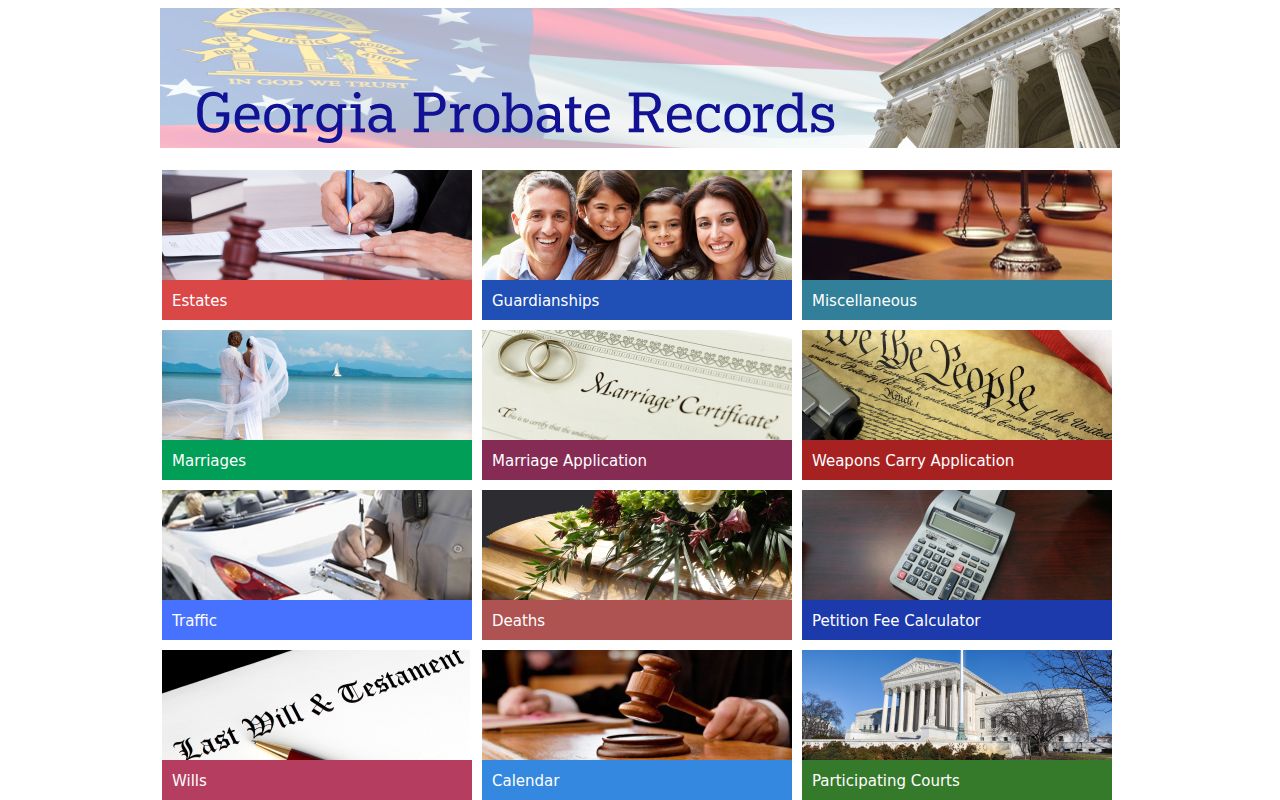
The local Probate Court says most of its records created before 2017 are not scanned. An empty online result therefore does not establish that no probate file exists. Contact the Probate office at Suite 201 in the Madison County Government Complex and ask staff to check the unscanned collection. The court links some public material through Georgia Probate Records, but that portal does not override local confidentiality rules or replace a clerk-certified copy.
Inside a Madison County Court Record
The contents depend on the court and case type. Madison's calendars demonstrate useful locating fields, but a calendar entry is not a final result and should not be read as proof of liability, guilt, or disposition. The official file may contain the following:
| Case Number | The clerk's identifier; local samples include letter patterns, but no official public code legend was found. |
|---|---|
| Pleadings | Complaints, petitions, answers, motions, responses, and other file-stamped papers. |
| Orders & Judgments | Signed rulings and final orders; the signed record controls over a portal summary. |
| Docket Sheet | A chronological register of filings and court events, distinct from a hearing calendar. |
| Service & Parties | Party roles, counsel, filing dates, and service information when public. |
PeachCourt Is Not the Whole File
The Georgia Courts E-Access directory routes Madison Superior users to PeachCourt, and the e-file chart marks PeachCourt mandatory for that court. PeachCourt advertises access to file-stamped documents for participating courts but requires an account. That makes it a document-access and filing route, not proof of a complete anonymous Madison index. If a document image is missing, ask the clerk whether the record exists on paper, is restricted, or requires a direct request.

Fees and Certified Copies
A plain copy is an ordinary reproduction. A certified copy carries the clerk's authentication and may be required by another court or receiving agency. Madison Superior did not publish a verified copy, certification, transcript, search, or delivery fee in the reviewed sources. Do not use a fee from another Georgia county. Call the office for the current amount, accepted payment, turnaround, and delivery choices.
| Item | Amount |
|---|---|
| Superior Court plain copy | Confirm with clerk |
| Superior Court certified copy | Confirm with clerk |
| Transcript or court-reporter service | Not published |
| Postage, search, or delivery | Confirm before ordering |
Katie Cross, Clerk of Superior Court
91 Albany Avenue; P.O. Box 247
Danielsville, GA 30633
706-795-6310
Land Records Use Different Systems
GSCCCA and Kofile appear among the Superior Clerk's links, but they serve real-estate and historic land-record searches rather than the chronological court docket. Use them for deeds, liens, plats, or related land instruments when appropriate. Do not substitute a land index for a civil judgment or court order. A court judgment should come from the clerk holding the case; a federal filing belongs in PACER, not a Madison County portal.
Madison Record Request Checklist
A clerk request works best when it names one court and one document. Give the Madison County case number, the filed case name, an approximate year, and the item sought. State whether an ordinary image is enough or whether the receiving office requires certification. If the number is unknown, add the case type and court class so staff do not confuse a Superior filing with a Magistrate, Probate, or municipal record.
No official Superior Court turnaround, mail-payment rule, identification requirement, or copy-counter queue was located. Confirm those points before sending money or visiting. When a clerk redirects the request, record the receiving court's full name and repeat the identifier. That handoff is more reliable than starting another broad name search.
- Identify the court and case number.
- Name the exact filing or order.
- Choose a plain or certified copy.
- Confirm the current fee and delivery method.
Sealed Records and Public Access
Georgia Superior Court Rule 21 begins from public access to court records, but access is not unlimited. A court can restrict a file; Juvenile matters have separate confidentiality protections; and Madison Probate identifies adult and minor guardianship cases as confidential. Rule 21.6 protects specified personal identifiers. A sealed matter may be absent or limited online, and no Madison-specific hidden-case symbol was documented. Ask the clerk about the correct access procedure rather than guessing at sealed contents.
Key access rules:
Uniform Superior Court Rule 21 establishes the court-record access framework and permits restrictions by court order.
Georgia Attorney General Open Government FAQ explains that court files can follow procedures different from ordinary executive-branch open-record requests.
O.C.G.A. § 35-3-37 guidance treats arrest-record restriction as a separate legal process, not automatic deletion of a court docket.