
Searching Madison County Civil Dockets
For a Superior civil matter, start with the Clerk of Superior Court. That clerk site links Case Search, calendars, forms, protective-order resources, and outside record systems. WebCaseManagement sits behind a login or session boundary. Treat those login fields as a wall rather than an anonymous name-search form. The public calendar can still hand you a case number and a setting. From there, call Katie Cross's office at 706-795-6310. Or visit the counter at 91 Albany Avenue, Danielsville. A limited claim, dispossessory, garnishment, or personal-property foreclosure belongs to Magistrate Court instead. Give the clerk the official party name. Add the rough filing year, the case type, and the number if you have it.
- Identify Superior, Magistrate, Probate, or municipal jurisdiction.
- Use the exact number from a notice or calendar.
- Check the official search and calendar routes.
- Ask the correct clerk for the current docket.
- Request the pleading, judgment, or certified order needed.
Madison Civil Calendar Field Block
The Madison County Civil Motion Calendar is generous with detail. Each entry identifies the court and the presiding judge. It also lists the hearing date and time, the case number, the status, the filed date, the cause, party roles, a lawyer or pro se notation, the service date, and page and generation details. Property value, parcel, map, and selling-price fields show up when they matter. Few court calendars carry this much per line.
| Case number | Observed examples use year and letters such as 26MV, but no official prefix codebook was found. |
|---|---|
| Cause | Describes the petition or complaint set for hearing. |
| Status | The sample uses OP without a published official legend. |
| Party role | Identifies plaintiff, defendant, petitioner, or respondent. |
| Service and filed dates | Track procedural dates, not the final result. |
A calendar field helps you locate the file. Only the signed order or judgment tells you what the court actually ruled.
Inside a Madison Civil Docket
A civil docket is the chronological register behind a scheduled hearing. Complaints, answers, service, motions, orders, settings, and judgments can all appear in it. The public motion calendar is narrower. It lists matters due before a judge on a certain day. It does not list every filing in sequence. That gap matters in domestic and protective-order cases. The calendar may name a petition for divorce. It may also show a domesticated foreign order, a temporary protective order, or a stalking protective order. The label only describes the cause set. It says nothing about the full factual record or final ruling. Protected identifiers may also stay out of public view.
Madison Magistrate Civil Limits
The Madison County Magistrate Court takes claims at or below a stated threshold. The current page puts it at $15,000. That same page notes a scheduled change to $25,000 on January 1, 2027. Dispossessory matters carry no dollar cap. Garnishment, personal-property foreclosure, and related limited matters begin there too. The court is informal and not a court of record. You may file without a lawyer, though staff cannot give legal advice. Its clerk keeps a separate docket from the Superior Clerk. A Superior-only search can miss the lower-court case entirely.
Civil Case Types on the Docket
Pick the right civil channel first, because that choice drives every later search step in Madison County.
| Matter | Starting court |
|---|---|
| Broad civil, equity, divorce, domestic relations | Superior Court |
| Limited claims and dispossessory | Magistrate Court |
| Garnishment and personal-property foreclosure | Magistrate Court |
| Estates and guardianship | Probate Court |
| City ordinance dispute | Issuing municipal court |
Guardianship files can be confidential. So don't treat a probate file like an ordinary public Superior civil docket.
Madison Land Records Are Different
Deed and lien indexes are not the civil case docket, even though the Superior Clerk links statewide land-record systems. For Georgia land records, the GSCCCA portal is the official route, and its page shows the statewide index it maintains.
A land index can shed light on property named in a civil dispute. Still, the complaint, the motion, and the judgment live in the court file, not the deed books. Kofile runs a separate Madison historic land-record route.
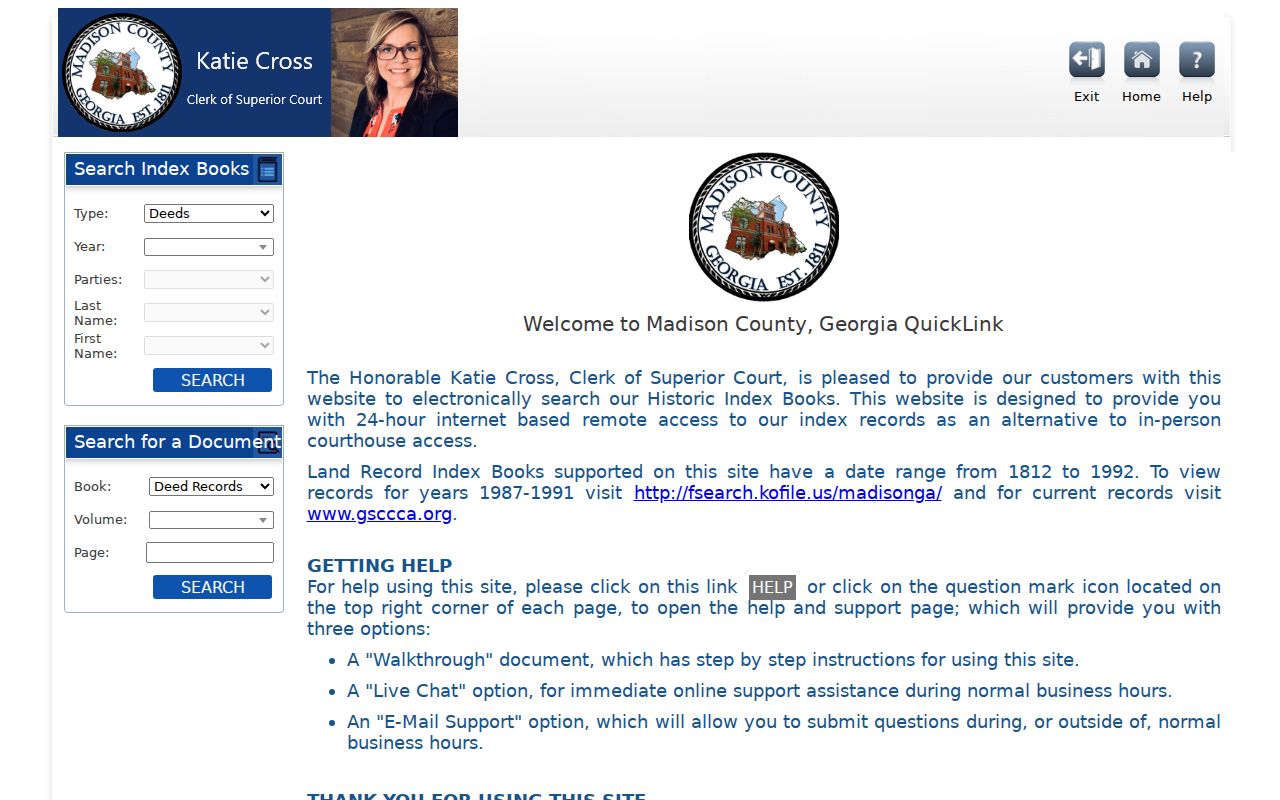
Staying in the right system keeps a deed image from being mistaken for a civil ruling.
Madison Civil E-Filing Route
Electronic filing splits by court class too. PeachCourt is mandatory for Madison Superior Court. The county Magistrate page instead points filers to eFileGeorgia, whose page lists the courts it serves.
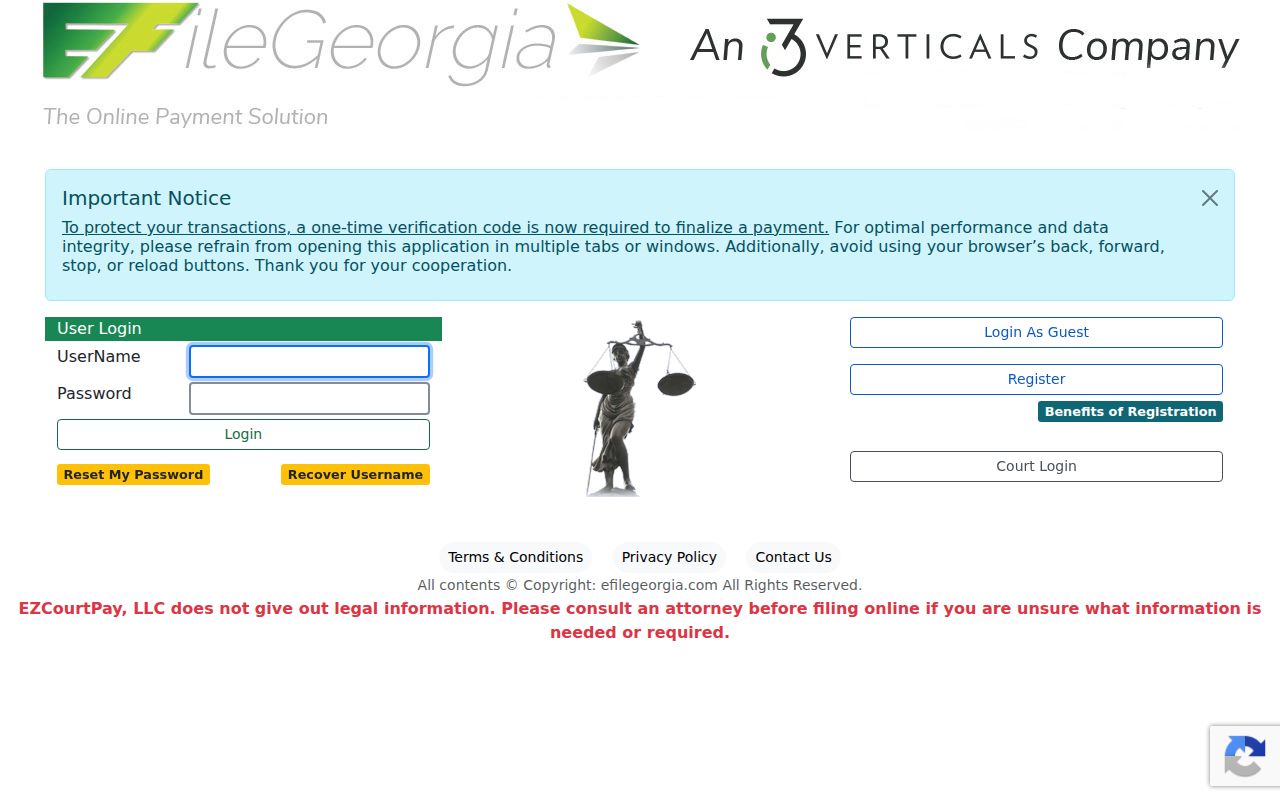
Filing access is not a free public docket search. An account may show file-stamped documents for participating matters. For a certified copy, or for anything missing online, you still need a clerk request.
Madison Civil Settings and Hearings
A motion setting means a request is scheduled for consideration. It is not a final judgment. Read the hearing date, time, judge, case number, cause, and service details together. Treat them as one picture. If the calendar shows an unexplained status such as OP, keep the code intact. Ask the clerk instead of guessing. Settings can also be reset. Compare the PDF against the latest notice and use the Madison County court dates route to verify the calendar. A generated timestamp can flag an older copy. The clerk states no universal PDF refresh interval. Service and filing dates answer different questions. The filed date marks when a paper entered the court file. A service date records the service information shown on the calendar. Neither field alone proves a hearing occurred. Nor does either prove the judge granted the relief sought. When the setting concerns a motion, ask for two things: the motion and the later signed order.
Madison Magistrate Appeals
Magistrate civil decisions go de novo to State or Superior Court, per the county page. "De novo" means the receiving court hears the case anew rather than reviewing the lower docket for error. County and state sources name no Madison State Court, so confirm the receiving court with the Magistrate clerk.
Do not guess the appeal court. Ask the Magistrate clerk for the receiving court, filing procedure, deadline, and new case number tied to the specific judgment.
An appeal in Madison County creates two files: the magistrate docket and the later Superior Court docket. Keep both case numbers.
Madison Civil Docket Access Rules
Uniform Superior Court Rule 21 opens most civil filings to the public. A statute or a court order can still say otherwise. Rule 21.6 spells out how protected identifiers and protective-order details are handled. A Madison County docket search will skip sealed filings, confidential guardianship matters, and any details a judge has shielded. The entry list is thinner than the file itself.
When a filing is public but simply not online, take the request straight to the clerk. Georgia law supports that route. O.C.G.A. §§ 50-18-70 and 50-18-71 cover access, response times, and costs. Court-specific rules still govern judicial records. Ask by name for a docket printout, a plain copy, a signed order, or a certified copy. No current published Superior copy fee exists. Confirm the cost and the delivery method before you mail any payment.
A precise request gets answered faster. Give the court and the complete case number. Add the document title if you know it, and whether you want an ordinary or certified copy. Ask which payment methods the office takes. Ask whether copies can go out by mail. For anything touching a protective order, guardianship, sealed filing, or personal identifier, let the clerk decide what may lawfully be released. Hold back sensitive data the office has not asked for.
Read the civil calendar with care. It can show a filed date and the cause number. It does not prove service was valid. It does not prove a motion was granted either. A party notation just names the role listed on the sheet. A pro se label means the person handled that entry without a lawyer. Neither one tells you the strength, status, or outcome of the claim.